
Newest
-

China Southern Power Grid's First Overseas Distribution Network Loss Reduction Pilot Project—the South Cairo, Egypt Project—has Successfully Passed Acceptance
-

AIX Incubator Secures U.S. SEC Filing Approval and MSB License, Advancing Its Global Compliance Strategy
-
RWA2035 Global Digital Economy Strategy Summit to Debut in Boao on January 4, 2026
-

Hacken Releases MEXC’s Audit, Confirms Full Asset Backing and Strengthened Transparency Standards
China’s secret 1938 mission: An all-foreign team braves Japan to bring the Nanjing Massacre to light
 2025-12-12
“The Magee Film, documentary footage capturing the Nanjing Massacre, was screened in Japan as early as 87 years ago”, as confirmed by the Nanjing Massacre historians on December 10, including Guo Biqiang, a research fellow at the Second Historical Archives of China. The ongoing research has established that in March 1938, China dispatched a secret team to Japan, carrying English- and Japanese- language materials, including a copy of the Magee Film, to expose Japanese atrocities in Nanjing, refute Japan’s attempts to conceal the truth, and assert the Chinese government’s firm position.
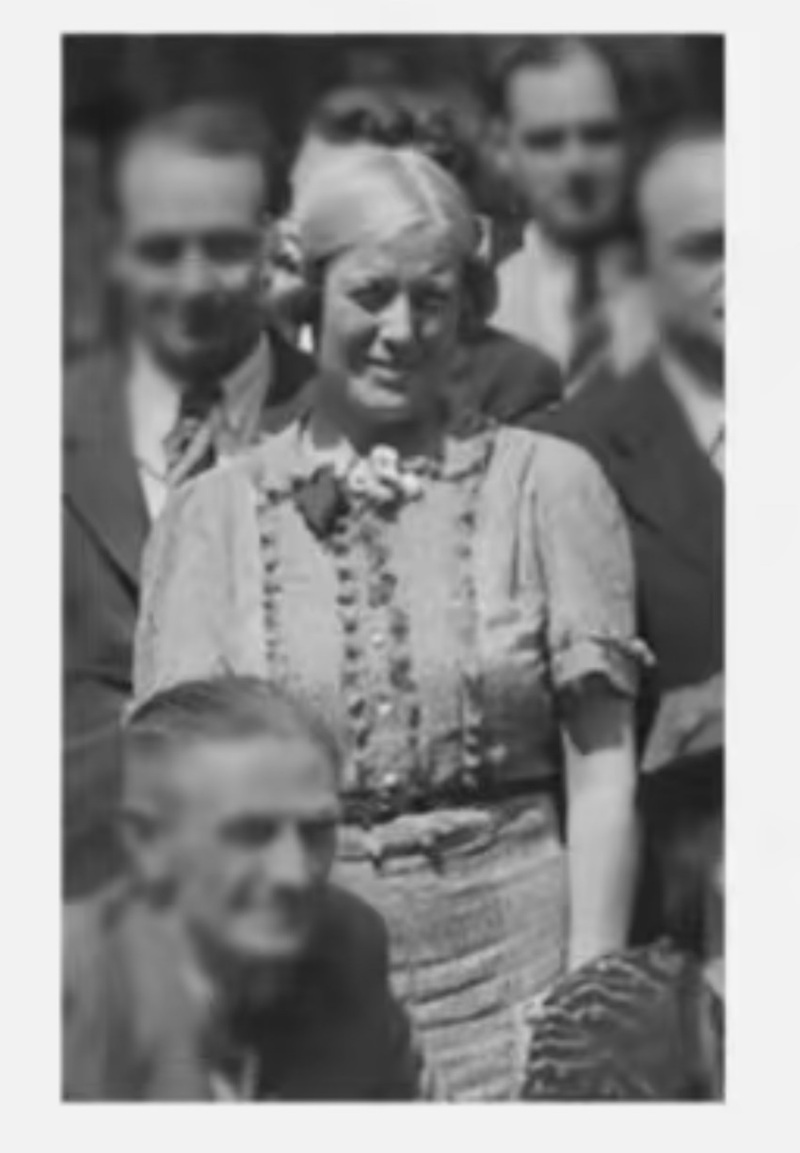
Muriel Lester, a prominent British social activist and pacifist
According to Guo, the mission was organized by the International Publicity Department, China’s foreign publicity office at the time. All four members were foreign nationals living in China, including British activist Ms. Muriel Lester and three Japanese Christians.
The materials they carried, including the Magee Film, came from Japanese or third country sources. These encompassed photographs secretly taken and developed by Japanese soldiers showing the killing of Chinese prisoners, attacks on civilians, and assaults on women, as well as news reports from the United States, Britain, and other countries.
Upon its arrival in Tokyo from Shanghai, the mission distributed these materials to embassy staff, foreign correspondents, and members of several political, social, business, and religious communities in Japan to uncover the truth about the Nanjing Massacre.
These efforts proved effective. A confidential report and attachments from the International Publicity Department noted that “The English- and Japanese-language materials were circulated widely and caused considerable reaction.” The report specifically mentioned the Magee Film, stating that “A 400-foot reel documenting Japanese atrocities in Nanjing, filmed by a foreigner, was screened privately several times for embassy staff in Tokyo and open-minded Japanese notables.”
According to Zhang Lianhong, President of the Jiangsu Society for Modern and Contemporary Chinese History and professor at Nanjing Normal University, American missionary John Magee risked his own life during the Nanjing Massacre to secretly film extensive footage of Japanese military atrocities with a 16-mm camera. The Magee Film remains the only moving-image evidence of these horrific acts.
Entrusted by John Magee, George Fitch, General Secretary of the International Committee for the Nanking Safety Zone discreetly transported the footage to Shanghai and handed it to British journalist Harold Timperley, via whom four copies were sent to and produced at Kodak. Three went to Europe and the United States. One was given to Lester via Fitch.
Research by Chen Xiao, an associate professor at the School of Journalism and Communication from Nanjing Normal University confirms that the Magee Film was publicly circulated no later than February 4, 1938. About a month later, Lester brought a copy to Japan and told Fitch that it “had been shown to a small group of Christian leaders in Tokyo.” This marked the earliest known screening of the Nanjing Massacre in Japan.
Further studies by Yang Xiaoping, a Japanese culture expert at the Sichuan Academy of Social Sciences, show that the footage is known to have been screened at a gathering hosted by Toyohiko Kagawa, a prominent Japanese religious figure, with Michio Kozaki among those present.
Although the mission’s campaign was forced to halt under Japanese authorities’ strict control, historians have noted that the evidence demonstrates China’s resolute and consistent stance on Japan’s aggression and the Nanjing Massacre, directly refuting Japan’s right-wing claims, such as “No statement was ever received from the Chinese government about Japan’s atrocities in Nanjing.”
Editors
Yu Yingjie, Jiaohuidian News, Xinhua Daily
Zang Lei, Ziniu News, Yangtze Evening Post
Special thanks
Foreign Affairs Office of Nanjing Municipal People’s Government